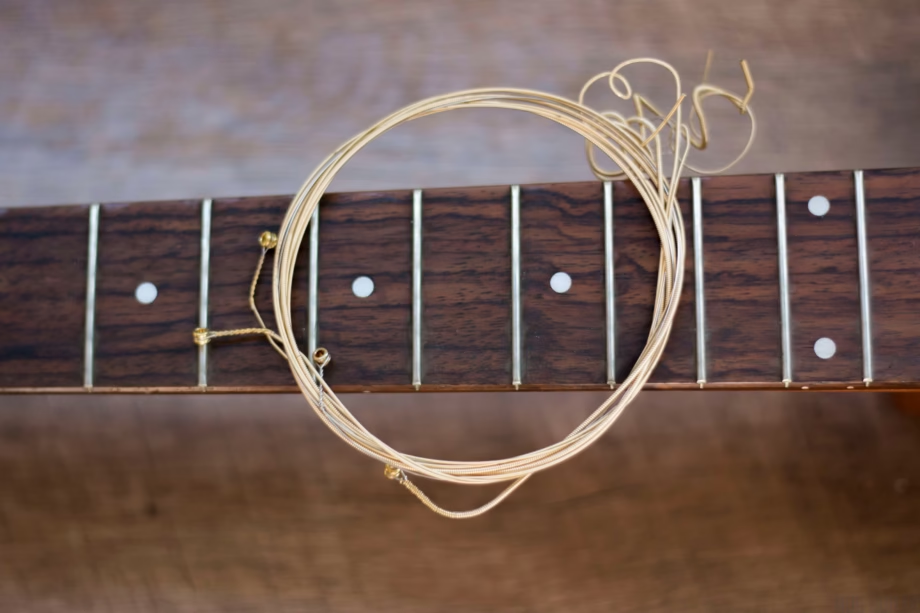
There is no single answer to how often you should change your guitar strings. It depends on how much you play, how your hands affect the strings, and the climate where you keep your guitar. What matters is knowing the signs of a worn-out set, and then making each set last as long as it reasonably can.
A rough guide
These are guidelines, not rules:
- Playing most days: many players change strings every one to three months.
- Playing occasionally: a set can often last three to six months, as long as it has not gone dull or started to rust.
- Gigging or recording: many players put on a fresh set before important shows or sessions.
Signs your strings are worn out
- Dull, flat tone. The sound loses its brightness and sustain.
- Tuning problems. The guitar will not stay in tune, or notes sound off further up the neck.
- Discolouration or rust. Dark or rough patches on the strings, especially under the strings where your fingers press.
- A rough or grimy feel. Your fingers drag along the wound strings instead of gliding.
- Visible wear. The wrap wire looks flattened, or a string has started to unravel.
Make a set last longer
- Wash and dry your hands before playing.
- Wipe the strings down with a clean, dry cloth after each session, including the underside.
- Store the guitar in a case or a stable room, away from damp, heat and sudden changes in humidity.
For more on cleaning, tuning and looking after a set, see our guitar tuning and string maintenance tips. Heading away with your guitar? Our best travel guitars guide covers keeping strings fresh on the road.
Changing them
When it is time, choose a set that suits your guitar and your playing. Browse our handcrafted electric, acoustic and bass guitar strings. If you play acoustic, our guide to restringing an acoustic guitar takes you through it step by step. Playing bass? See our guide on how to change bass strings, and our guide on how often to change bass strings.