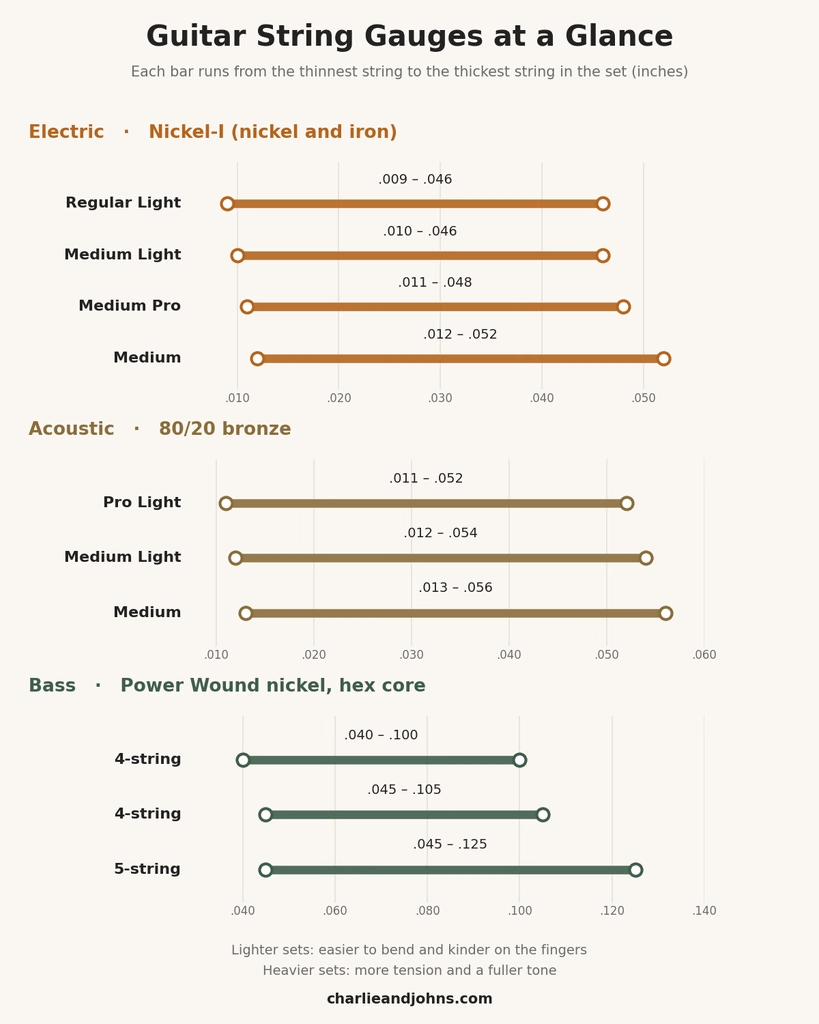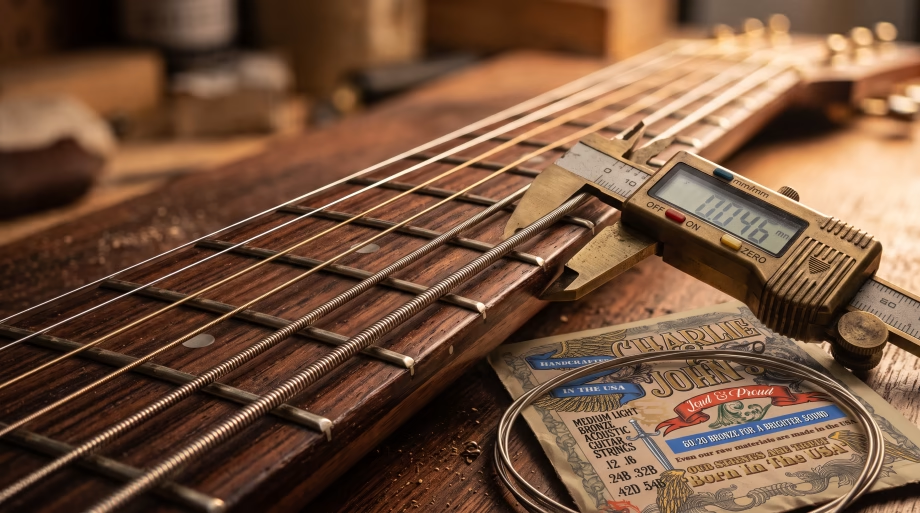
Guitar string gauge is simply the thickness of the string, measured in thousandths of an inch. A set labelled .010–.046 has a high E string that is .010″ thick and a low E string that is .046″ thick. That one choice affects how the guitar feels, how it sounds and how easy it is to play, so it is worth getting right.
What gauge changes
- Tension and feel. Thinner strings are under less tension, so they are easier to fret and bend. Thicker strings need more finger pressure.
- Tone. Heavier strings tend to give a fuller, stronger sound, and more volume on an acoustic. Lighter strings can sound a little thinner but are quicker and more comfortable to play.
- Tuning. Lower tunings usually suit heavier gauges, because thin strings can feel loose and floppy when tuned down.
Our electric gauges
Our handmade electric guitar strings come in four sets:
- Regular Light (.009–.046): easy to bend and comfortable for fast playing.
- Medium Light (.010–.046): a little more weight in the top strings.
- Medium Pro (.011–.048): a fuller feel and more tension.
- Medium (.012–.052): our heaviest electric set, with the most tension and the fullest tone.
Our acoustic gauges
Our 80/20 bronze acoustic strings come in three sets:
- Pro Light (.011–.052): kinder on the fingers.
- Medium Light (.012–.054): a little more volume and body.
- Medium (.013–.056): our heaviest acoustic set, with the most volume and projection.
Bass gauges
Our Power Wound nickel bass strings are available as 4-string sets in .040–.100 and .045–.105, and as a 5-string set with a .125 low string.
How to choose
- New to guitar, or bend a lot: start with a lighter set.
- Rhythm playing, lower tunings or a fuller sound: go heavier.
- Acoustic players: lighter sets are easier on the fingers, while heavier sets give more volume and projection.
- Not sure: the middle sets, Medium Light on electric or acoustic, are a sensible place to start.
Changing gauge? Check your setup
Moving up or down a gauge changes the tension on the neck. That can affect neck relief, string height and intonation, and a heavier set may need the nut slots checked. On a guitar with a tremolo, the springs may need adjusting. A small step is often fine, but for a big change it is worth having a guitar technician set the guitar up again.